
Built for Loads and Terrain
Suspension System Upgrades in Middleton for vehicles requiring improved capability, durability, and ride quality
Factory suspension systems are engineered for average use cases and moderate loads, which means they compromise performance when you regularly tow trailers, haul equipment, drive technical off-road trails, or operate in conditions that exceed manufacturer assumptions. B Real Performance Services LLC designs suspension upgrades around vehicle-specific goals rather than generic packages, replacing and enhancing key components to improve ride quality, handling stability, durability under stress, and capability across demanding applications. Upgrades address measurable performance gaps between what your current suspension delivers and what your actual driving demands require.
The upgrade process begins with evaluating current suspension limitations relative to how you use the vehicle, whether that involves maintaining control while towing heavy loads, increasing wheel travel for rock crawling, reducing body roll during highway merges, or improving comfort on long gravel road commutes. Component selection focuses on integration with existing systems rather than maximizing individual part specifications without regard for how changes affect overall vehicle dynamics.
Contact us to discuss upgrade options that align with your vehicle's intended use and performance requirements.
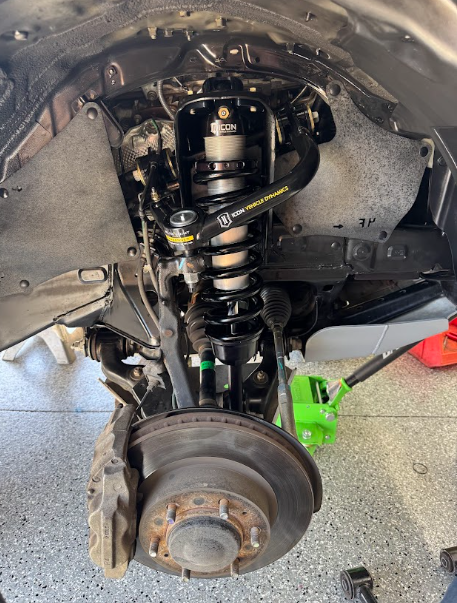
What Suspension Upgrades Actually Accomplish
Upgrading suspension involves replacing springs to adjust load capacity and ride height, installing performance shocks with better damping control and heat dissipation, enhancing control arms or links to manage geometry changes, and integrating components that work together rather than creating conflicting dynamics. Professional installation ensures proper torque specifications, alignment settings, and system calibration that prevent premature wear or handling imbalances.
After upgrades are installed, towing feels more controlled with reduced trailer sway and rear squat, off-road sections become more manageable as increased suspension travel absorbs obstacles without harsh impacts, and daily driving improves through better body control and refined damping over varied surfaces. The vague or overworked sensation that develops when stock suspension operates beyond its design envelope disappears once components match your actual load and terrain demands.
Suspension upgrades differ from lift kits or leveling modifications in that they address functional performance and load capacity rather than just ride height changes. Effective upgrades balance multiple variables including spring rate, damping force, suspension geometry, and component durability to produce measurable improvements in specific use cases without creating new problems in other driving situations.
What vehicle Owners Usually Ask
Vehicle owners considering suspension modifications frequently ask about component selection, installation requirements, and how upgrades affect different driving conditions.
What determines which components need upgrading?
Current suspension limitations relative to your driving patterns dictate priorities, with towing applications requiring stiffer springs and stronger damping, off-road use needing increased travel and better articulation, and performance driving demanding tighter control and reduced body motion.
How do suspension upgrades improve towing confidence?
Upgraded springs reduce squat under tongue weight, performance shocks control trailer-induced oscillation more effectively, and stiffer sway bars minimize body roll during lane changes while towing heavy loads.
Why does proper installation matter for upgraded suspension?
Incorrect torque settings create joint wear, misaligned components cause uneven tire contact and handling pull, and improper ride height adjustment affects steering geometry and suspension travel limits.
What changes after performance suspension is installed?
Steering input produces quicker directional response, suspension maintains better tire contact over uneven surfaces, braking feels more controlled without excessive weight transfer, and overall vehicle composure improves during transitions between different road conditions.
When should I upgrade suspension instead of replacing worn parts with stock components?
If your vehicle consistently operates beyond factory design assumptions through heavy loads, frequent off-road use, or performance driving, upgraded components provide capability margins that prevent the overworked feel and accelerated wear that stock parts experience in demanding applications.
B Real Performance Services LLC selects suspension components based on documented vehicle use and performance objectives rather than generic upgrade formulas. Schedule a consultation to review your driving requirements and identify which suspension enhancements will produce measurable improvements for your specific needs.