
Stance and Clearance for Real Use
Lift & Leveling Kits in Middleton for trucks requiring improved tire clearance and off-road capability
Lift kits increase overall ride height and suspension travel to accommodate larger tires and improve ground clearance for off-road obstacles, while leveling kits eliminate the forward rake built into factory truck suspension by raising the front to match rear height without altering total suspension geometry. The distinction matters because your goals determine which approach maintains handling stability and ride quality after installation. BReal Performance Services LLC installs vehicle-specific solutions for trucks and off-road-focused vehicles operating across varied terrain, matching kit design to customer goals and driving habits rather than applying generic height increases that compromise performance.
Lift installation involves replacing springs, shocks, and sometimes control arms or radius arms depending on height increase, while leveling typically uses spacers or torsion key adjustments to raise the front without full suspension replacement. Both modifications require alignment correction to restore proper tire contact angles and steering geometry, and improper installation creates accelerated component wear or handling issues that undermine the benefits of increased ground clearance.
Request a lift or leveling consultation to determine which approach fits your vehicle and intended use.
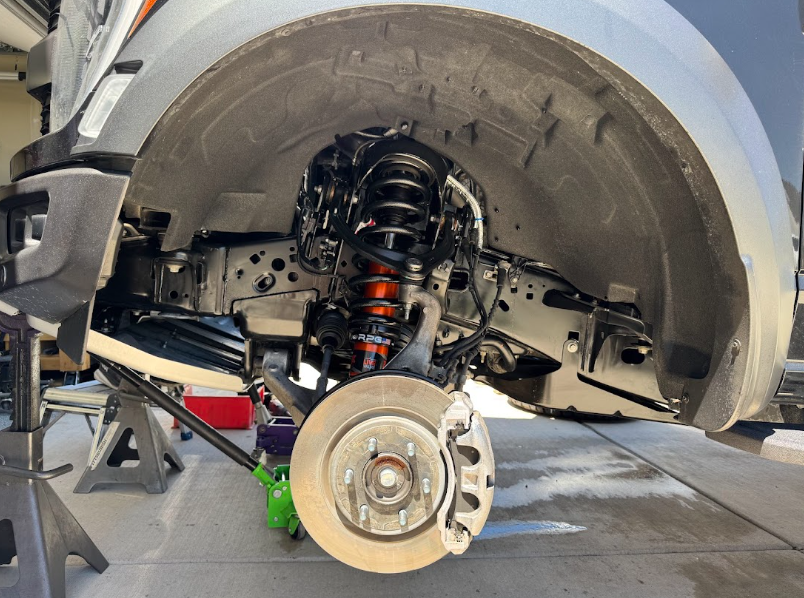
The Difference Between Lifting and Leveling
Lifting increases ground clearance front and rear, requires larger diameter tires to fill wheel wells proportionally, and often involves upgrading suspension components to handle altered geometry and load distribution. Leveling addresses only the front-to-rear height difference to improve appearance and accommodate modest tire size increases without the cost or complexity of full lift kit installation, making it suitable for trucks that remain primarily street-driven.
Once installation is complete, larger tires fit within wheel wells without rubbing during suspension compression or steering articulation, approach and departure angles improve for navigating steep inclines or obstacles, and overall vehicle stance appears more aggressive while maintaining stable handling characteristics. Professional installation preserves ride quality by selecting components that maintain proper damping control and spring rates despite changes in suspension geometry and unsprung weight from larger wheels and tires.
Maintaining ride quality and suspension performance after lift or leveling installation requires matching shock valving to new spring rates, ensuring alignment stays within specifications as suspension cycles through its travel range, and selecting tire sizes that balance clearance gains against increased rotational mass. Kits installed without these considerations often produce harsh ride quality, accelerated steering component wear, or vague handling that makes the vehicle less enjoyable to drive despite improved appearance.
Common Questions About This Service
Truck owners considering height modifications usually want clarity on kit selection, installation requirements, and post-installation performance.
What decides whether I need a lift kit or leveling kit?
Full lift kits suit off-road use requiring maximum ground clearance and large tire fitment, while leveling kits work for street trucks where you want improved stance and moderate tire upgrades without altering overall suspension travel or ride height significantly.
How does lift height affect daily driving?
Moderate lifts between two and four inches maintain acceptable ride quality and handling with proper component selection, while extreme lifts require more extensive modifications to steering, drivetrain angles, and brake lines that increase complexity and cost.
Why does alignment matter after installation?
Lifting or leveling changes suspension geometry and alters camber, caster, and toe angles that affect tire wear patterns and steering behavior, and proper alignment correction prevents uneven tread wear and pulling during highway driving.
What improves with properly installed lift kits?
Off-road sections become more manageable as increased ground clearance prevents undercarriage contact with rocks and ruts, larger tires improve traction in loose terrain, and approach angles allow steeper climbs without bumper or frame strikes.
When should I avoid aggressive lift heights?
Daily-driven trucks operating primarily on paved roads sacrifice ride comfort, fuel economy, and handling predictability with extreme lifts, making moderate height increases more practical for vehicles that see mixed highway and occasional trail use.
BReal Performance Services LLC matches lift and leveling solutions to individual vehicle specifications and usage patterns rather than applying standardized height formulas. Contact us to discuss how different kit options affect your truck's capability, ride quality, and long-term component durability based on where and how you drive.